The demand for eco-friendly cat litter continues to rise globally, and 2025 is shaping up to be a key year for manufacturers looking to switch to sustainable cat litter production solutions. Whether producing bentonite, tofu, crystal, or mixed-formula litter, factories are shifting toward cleaner processes, automated systems, and cost-efficient machinery. Understanding what defines a “green” cat litter manufacturing setup can help new investors plan a competitive and responsible cat litter production line.
1. Growing Demand for Eco-Friendly Cat Litter Materials
As pet owners become more environmentally conscious, the market is moving away from traditional products toward materials such as:
- Tofu cat litter made from soy fiber or pea residue
- Biodegradable clumping litter from corn, wheat, or recycled organics
- Low-dust bentonite litter with optimized processing
This trend pushes producers to adopt sustainable cat litter processing systems that reduce energy use and improve product purity.
2. Energy-Efficient Cat Litter Manufacturing Equipment
A modern cat litter manufacturing plant increasingly prioritizes equipment that can lower operational costs while maintaining consistent quality. Key systems include:
- Raw material crushing units (also known as litter pulverizers or millers)
- Mixing and blending machines for uniform moisture distribution
- Cat litter granulation equipment such as disc granulators or extrusion granulators
- Rotary drying machines to reduce moisture while minimizing fuel consumption
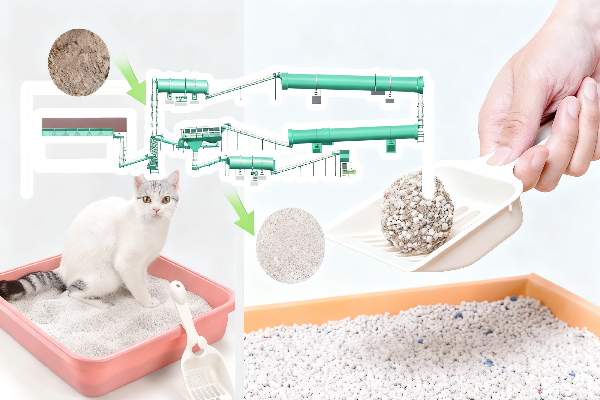
These machines form the backbone of a high-efficiency cat litter production system, ensuring stable pellet shape, low dust levels, and reduced waste. Learn more.
3. Automation and Clean Production Technology
Automation—through conveyors, dosing systems, and PLC controls—is becoming standard in advanced cat litter production lines. Benefits include:
- Better product consistency
- Lower labor costs
- Reduced contamination and dust emission
- Improved traceability of each batch
For investors, adopting an automated cat litter plant not only increases capacity but also aligns with sustainability goals by controlling energy and material losses. Welcome to consult YUSHUNXIN!
4. Waste Reduction and Recycling in Cat Litter Plants
Sustainable manufacturing also involves efficient handling of by-products. New systems allow:
- Recycling drying exhaust heat
- Reusing screening rejects
- Minimizing wastewater during tofu litter processing
- Designing closed-loop dust collection systems
These improvements help manufacturers reduce their carbon footprint and meet environmental regulations in 2025 and beyond. If you need, welcome to visit: https://www.fertilizerequipmentprice.com/cat-litter-production-line/