Freeze-dried meat is one of the most practical high-protein ingredients in modern food production. It keeps the nutritional value and texture of meat, becomes extremely light, and stores for years without refrigeration. For producers of instant meals, soups, snacks, pet food, and outdoor rations, freeze-dried meat turns a perishable raw material into a flexible, shelf-stable component. This guide explains how the process works and what a commercial line needs.
Why Freeze-Dry Meat
Meat is high in protein and water, which makes it both valuable and perishable. Conventional cooking and drying rely on heat, which can toughen the meat and reduce its nutritional value. Freeze drying removes water at low temperature, so the muscle structure and protein quality are preserved. The result is a light, porous piece that rehydrates quickly and keeps a natural meat flavor. That combination is why freeze-dried meat appears in premium instant meals and high-protein snacks.
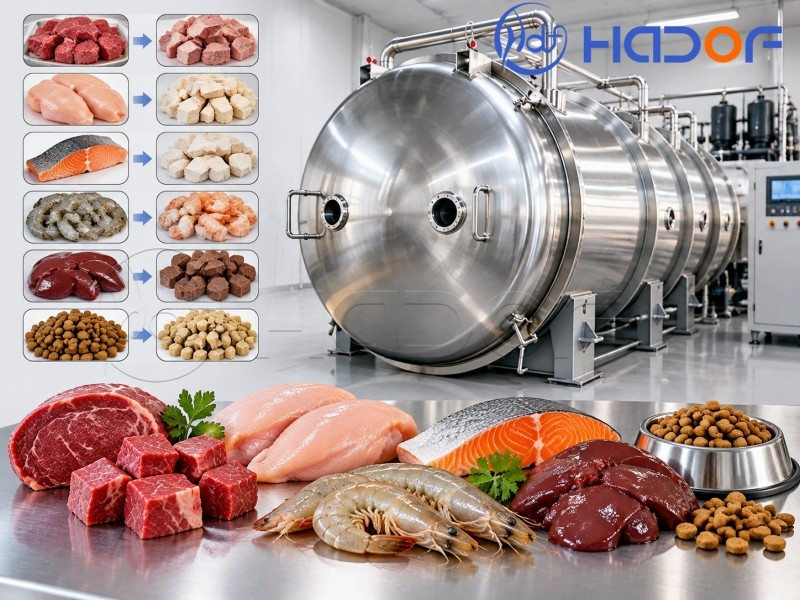
Commercial Meat Freeze Dryer
The Production Process
A commercial freeze-dried meat line usually follows this sequence:
- Receiving and preparation — meat is inspected, trimmed, and cut to a consistent size.
- Cooking or pretreatment — a controlled heat step can improve color, texture, and safety.
- Pre-freezing — the meat is frozen quickly to protect structure.
- Vacuum freeze drying — ice sublimates directly to vapor at low pressure.
- Sorting and packaging — finished pieces are checked and packed in barrier packaging.
Each stage matters. Inconsistent piece size leads to uneven drying, and slow freezing produces large ice crystals that damage texture. A well-designed line controls these steps together rather than treating them separately.
Equipment for the Line
The core of the line is the commercial meat freeze dryer, sized around the product's freezing behavior and batch weight. Around it, the line needs preparation and cutting equipment, a pre-freezer, and a packing machine. The dryer's chamber, shelves, condenser, and vacuum system determine cycle time and consistency, so they are worth specifying carefully.
For producers who process several meat types, flexibility matters. The line should handle different piece sizes and moisture levels, and the trays and contact surfaces should be easy to clean. If you plan to expand, choose a configuration that lets you add capacity without rebuilding the whole line.
Capacity and Configuration
Capacity is usually specified by batch weight or shelf area. Meat is dense, so a given shelf area holds fewer kilograms than light products such as fruit. The right size depends on your product format, drying cycle, and target output. Producers often start with a batch size that matches their raw-material supply and then add capacity as demand grows. Under-sizing the dryer leaves meat waiting and risks quality loss; over-sizing it raises running costs.
Sizing a Freeze-Dried Meat Line
Sizing starts with your raw-material supply. How much fresh meat can you prepare each day, and how consistent is that supply? Meat is dense, so a given shelf area holds fewer kilograms than light products, and the drying cycle is usually longer than for fruit or vegetables. The dryer should be sized to a comfortable daily batch, not to a theoretical maximum. Many producers start with one dryer and plan the preparation, freezing, and packing areas so a second unit can be added later. That approach keeps the initial investment manageable while leaving room to grow.
Hygiene and Food Safety
Meat is a high-risk food category, so hygiene is not optional. Raw and cooked areas should be separated, contact surfaces should be easy to clean, and the drying chamber should be kept free of debris between batches. Cooking and cooling steps must be controlled and recorded, and finished product should be tested for microbial safety. Batch records should link raw material lots, process parameters, and packaging dates, so any issue can be traced quickly.
Quality Control
Quality control starts with the raw material. Meat should be fresh, properly chilled, and consistent in size. Cooking and pretreatment must be controlled so the product keeps its color and texture without becoming dry or tough. The freeze-drying process should be logged for pressure, shelf temperature, and cycle time, and finished product should be tested for moisture, rehydration, and microbial safety.
Packaging and Shelf Life
Freeze-dried meat is hygroscopic, so packaging is critical. Moisture- and oxygen-barrier bags, pouches, or cans protect the product from humidity and oxidation, and nitrogen flushing can extend shelf life further. Correct packaging keeps the meat stable for years, while poor packaging quickly leads to softening and flavor loss. For convenience foods, portion size and packaging format are also part of the product design.
Common Mistakes to Avoid
The first mistake is using meat that is already losing quality; freeze drying preserves quality but cannot improve it. The second is cutting pieces to inconsistent sizes, which leads to uneven drying. The third is freezing too slowly, which damages texture. The fourth is overloading trays, which blocks vapor flow and lengthens the cycle. Finally, skipping a proper packaging barrier undoes the benefit of freeze drying within weeks.
Conclusion
Freeze-dried meat is a high-value ingredient for convenience foods, high-protein snacks, and export markets. The line is straightforward — prepare, cook, freeze, dry, and pack — but every stage must be designed around the product. HADOF Food Processing Manufacture designs production lines and industrial freeze dryers for freeze-dried meat. Tell us your product and target output, and we will help you plan the right system.