A fresh-cut vegetable plant, a salad factory, or a central kitchen that sorts and trims produce on a table usually wants to know how much energy the step adds. The industrial manual vegetable cutting and sorting table for a line uses a frequency-controlled conveyor and a light motor, so its energy draw stays low while it keeps the operators organized. This article explains the energy drivers for a food processing step.
How Much Power Does a Sorting Table Draw?
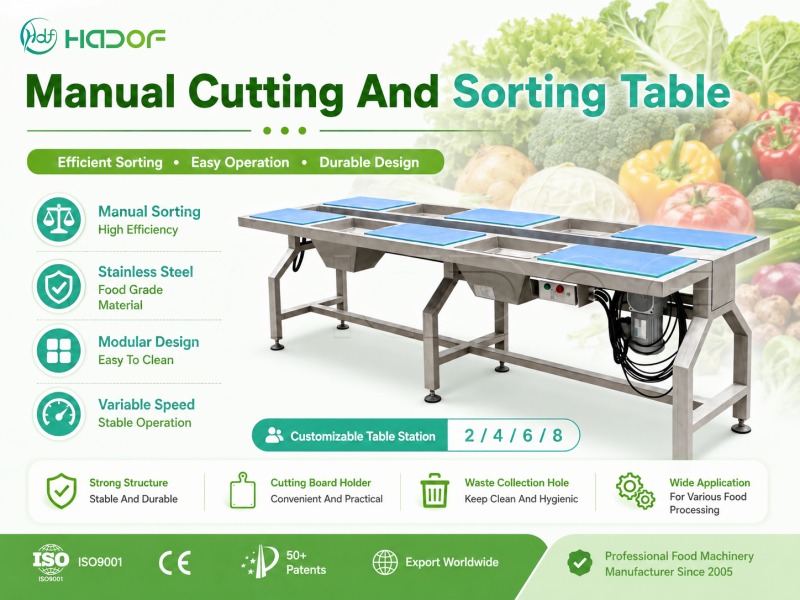
The table uses a small conveyor motor and a frequency control, so its power is far lower than the washing and drying machines around it. The six-workstation cutting and sorting table with waste holes keeps six workers trimming and inspecting at once, so the energy per operator stays low. A plant that records this light load sees the sorting stage as an efficient food equipment choice.
How Does the Conveyor Speed Affect Energy?
The frequency-controlled conveyor lets the supervisor match the belt to the material, so the motor runs only as fast as the workers need. A slower, steady belt uses less power than a rushed line. This adjustable control is the food manufacturing setting that keeps the energy use low.
How Does the Double-Layer Structure Reduce Waste?
The double-layer table carries raw material on the upper belt and finished product or waste on the lower belt, so the workers trim and dispose in one position. This design removes the walking and re-handling that waste energy and time. A plant that uses the structure well keeps the food handling efficient.
How Does the Table Connect With Washing and Drying?
A sorting table works best when the washed produce arrives on a belt and the trimmed product leaves directly to cutting or drying. The line connects with a washer, the table, and an air dryer after a sorting table, and each handoff needs a matched speed. A smooth connection keeps the food processing system moving.
How Should a Plant Measure the Energy?
Manual labor on a sorting table uses a small motor load, so a plant measures the energy by the conveyor power and the shift hours. You can review the sorting table manufacturer before a purchase, and that review shows the structure and service. A measured figure turns the food machinery decision into a clear energy picture.
How Does the Table Support Inspection Efficiency?
The stainless steel sorting table for fresh-cut vegetables keeps the trimming and the inspection at fixed stations, so the workers catch defects without walking the line. This organized flow is the food preparation step that turns manual sorting into a measured process. A plant that uses the stations well keeps the food handling efficient and the yield high.
Conclusion
An industrial manual vegetable cutting and sorting table uses only a small conveyor motor, and its frequency control and double-layer structure keep the energy per operator low. These choices keep the food production line efficient. If you have interests, you can learn more about https://www.hadofps.com/products/manual-cutting-and-sorting-table/