Fruit and vegetable factories need more than a nominal capacity figure when they select washing machinery. Strawberries, tomatoes, whole lettuce, cut vegetables, potatoes, beans, seafood, and pickled vegetables create different requirements for water movement, conveying, sediment removal, and downstream treatment. A 500–2,000 kg/h bubble food washer for produce factories gives food processors several capacity and tank-length options while keeping bubble agitation, water flow, conveying, overflow separation, and drainage within one continuous food production process. The final equipment quotation therefore depends on raw material, hourly output, tank length, conveyor design, optional treatment stages, and line connection rather than one standard machine specification.
What Factors Affect Bubble Food Washing Machine Cost And Configuration For A Food Factory?
A bubble food washing machine combines several systems that influence manufacturing cost and production suitability. Tank length determines available washing distance, while conveyor width and speed influence product loading and residence time. The blower controls bubble movement, and the water system carries loose soil and lightweight impurities toward separate collection areas. A food factory may also require spray rinsing, water filtration, ozone treatment, dewatering, or an additional washing stage. Those additions change the equipment configuration even when two factories request the same hourly capacity.
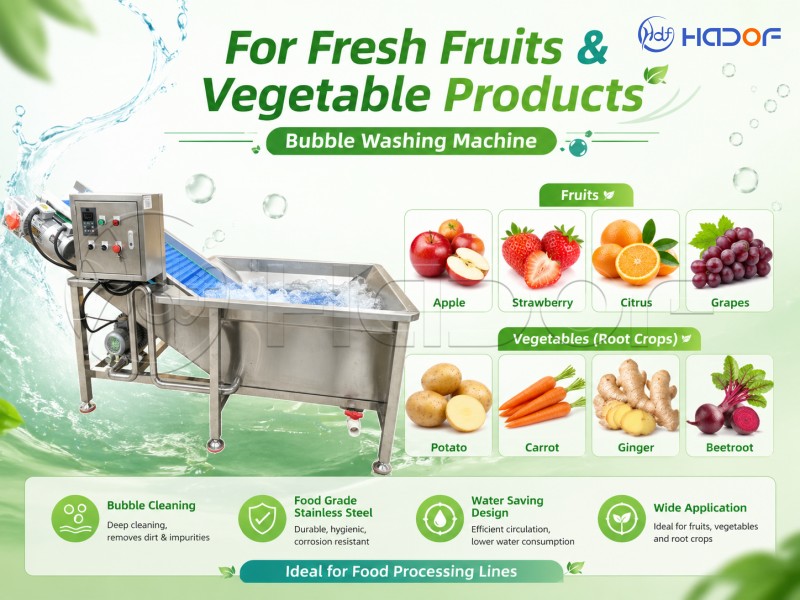
Hadof currently offers standard bubble-washer capacities from 500 to 2,000 kg/h, with common tank lengths from 2.5 to 6 meters. The machine combines an air-bubbling system, water tank, conveyor, overflow area, drainage outlet, and control system for continuous washing. A project team should therefore compare the entire food processing system instead of treating the washer as an isolated purchase.
Which Industrial Bubble Washing Machine 500 To 2,000 kg/h Capacity Fits Different Production Scales?
A small fresh-produce workshop does not need the same washing path as a frozen vegetable factory that feeds several downstream machines continuously. Hadof currently lists a 500 kg/h model with a 2.5-meter washing section, a 600 kg/h model with a 3-meter section, and a larger 1,500–2,000 kg/h model with a 6-meter section. These configurations also use different installed power according to machine size and operating requirements.
An air-bubble cleaning machine with adjustable washing intensity can suit a central kitchen, produce packing house, frozen vegetable plant, or food manufacturer when the processor matches machine size with real feed rate. A factory that overloads a shorter tank can reduce product movement and washing contact, while an unnecessarily long system can occupy valuable production space. Capacity selection therefore needs to follow raw-material volume, feeding consistency, daily operating hours, and downstream food preparation capacity.
How Does A Bubble Food Washing Machine Handle Strawberries, Tomatoes, Leafy Greens, Root Crops, And Small Products?
Different raw materials require different contact intensity. Whole lettuce, spinach, cabbage, apples, grapes, citrus fruit, and similar produce can move through bubble washing without the direct abrasive action that a brush system creates. Root vegetables such as potatoes, carrots, ginger, radishes, and beets can also use bubble washing as a pre-washing step before peeling or cutting. Beans, peas, corn kernels, shrimp, shellfish, and pickled vegetables create additional washing or soaking applications.
A continuous produce washer with overflow and sediment discharge separates lightweight floating material through the overflow area while heavier sand and soil settle toward the drainage section. This separation supports food material treatment because workers do not need to remove every contaminant manually during production. Delicate materials such as strawberries as a soft fresh fruit also require careful conveyor and water-flow selection so the food washing process cleans the surface without unnecessary impact.
How Do Water Circulation, Optional Ozone Treatment, And Conveyor Design Affect Bubble Washing?
Water management changes both operating conditions and food handling quality. Hadof states that its circulating system reuses washing water with periodic replacement rather than relying only on continuous full drainage. The equipment can also add optional treatment or rinsing functions according to project requirements. The current product information notes that customers can select different belt materials for delicate produce such as tomatoes and eggplants when surface protection matters.
A bubble vegetable washing equipment system with water-circulation options therefore needs a configuration that matches the factory’s water quality, soil load, drainage conditions, and sanitation plan. Heavy field soil can increase filter and water-treatment demand, while lightly contaminated packed produce may need gentler washing and a shorter process. Food factories should also consider wastewater management, sediment disposal, and cleaning access when they evaluate long-term food manufacturing operation.
When Should A Bubble Washer Connect With A Complete Vegetable Cleaning Production Line?
A standalone bubble washer can handle one washing stage, but many commercial projects need sorting, cutting, secondary washing, draining, blanching, drying, or packaging around that machine. Hadof’s complete vegetable cleaning line with bubble and vortex stages combines different technologies according to material form. The line description places bubble washing within systems for whole vegetables, diced vegetables, sliced vegetables, shredded materials, leafy products, and root crops.
For example, a potato processor may use bubble washing before peeling, while a fresh-cut salad factory may place bubble washing after sorting or as a secondary cleaning stage. A frozen vegetable factory may add cutting, blanching, cooling, dewatering, and packaging after washing. This food production design gives each machine a clear task and prevents one washer from carrying the full load of the complete food preparation procedure.
What Information Should A Buyer Provide Before Requesting A Bubble Food Washing Machine Quotation?
A useful quotation needs clear production information. The project team should define the raw material, hourly capacity, product dimensions, soil level, whether the product remains whole or enters the washer after cutting, available workshop space, water conditions, and required downstream machines. The team should also define whether the process needs additional rinsing, water filtration, ozone treatment, dewatering, air drying, or packaging integration.
Hadof fresh-produce processing systems cover washing, cutting, draining, pretreatment, drying, freezing, and other food processing machinery, so a buyer can evaluate the bubble washer as part of a larger production route rather than as a standalone unit. Buyers who need additional technical details can review available bubble washer configurations according to production capacity, material type, and factory layout.
In conclusion, a 500–2,000 kg/h bubble washer should match product structure, soil load, washing distance, water management, conveyor design, and downstream production requirements. A smaller configuration can suit central kitchens and compact fresh-produce workshops, while a longer and higher-capacity system can fit continuous food manufacturing plants. If you have interests in bubble washing equipment for fruits, vegetables, seafood, or pickled products, you can learn more about: