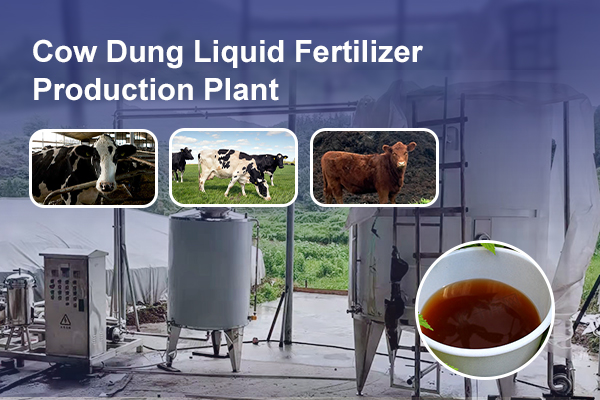
With the rising demand for sustainable agriculture, cow dung liquid fertilizer production has become an increasingly discussed topic in farming and agro-processing communities. Converting fresh cattle manure into liquid fertilizer is not only a way to recycle organic waste, but also a practical method to produce nutrient-rich inputs for soil improvement and crop growth. This article walks through a realistic production workflow, focusing on equipment and process logic rather than theory.
Raw Material Preparation: Handling Fresh Cow Dung Efficiently
Fresh cow dung usually contains high moisture, fibrous impurities, and uneven consistency. Before entering the liquid fertilizer manufacturing process, raw manure is commonly diluted with water or recycled liquid to form a pumpable slurry. At this stage, solid-liquid separation becomes critical. Using a screw press separator or stacked screw dewatering machine helps remove excess fibers, preventing downstream blockages and ensuring smoother liquid processing.
This step directly influences the stability of the cow manure liquid fertilizer line, as untreated solids can cause sedimentation issues later.
Liquid Fermentation: Turning Manure Slurry into Available Nutrients
The core stage of liquid organic fertilizer production from cow dung is fermentation. Most producers adopt anaerobic fermentation technology, where the slurry is processed in sealed tanks under controlled conditions. An anaerobic fermentation tank allows organic matter to decompose steadily, releasing soluble nutrients while reducing odor.
Compared with open fermentation pits, industrial fermentation tanks provide better temperature control, shorter processing cycles, and more predictable fertilizer quality. This is why modern liquid fertilizer production systems increasingly rely on integrated fermentation equipment.
Filtration and Conditioning: Improving Product Stability
After fermentation, the liquid usually undergoes secondary filtration to remove remaining fine particles. This step is essential for improving appearance, reducing sediment, and extending storage life. Some producers also adjust concentration through dilution or blending, depending on crop application requirements.
In a complete cow dung liquid fertilizer manufacturing line, this section often includes mixing tanks, filters, and circulation pumps to ensure uniformity.
Final Processing: From Storage to Filling
Once stabilized, the finished liquid fertilizer is transferred to storage tanks before filling. For small to medium producers, semi-automatic filling machines are often sufficient, while larger operations may use automated liquid fertilizer filling systems. Proper filling equipment reduces spillage, improves efficiency, and ensures consistent packaging volumes.
This final stage is where liquid fertilizer production equipment directly affects labor costs and daily output. Learn more!
Why Workflow Design Matters More Than Scale
Whether operating a small farm-based setup or an industrial cow dung liquid fertilizer production plant, workflow design plays a bigger role than size alone. Efficient separation, controlled fermentation, and proper filtration reduce operational risks and product inconsistencies.
Many equipment suppliers, including manufacturers like YUSHUNXIN, focus on providing modular solutions that allow producers to expand step by step rather than investing in oversized systems from the start.
Closing Thoughts
Transforming fresh cow dung into liquid fertilizer is a practical, scalable process when supported by the right equipment layout. Understanding each stage of the cow manure liquid fertilizer production workflow helps producers make informed decisions, improve efficiency, and maintain consistent fertilizer quality without unnecessary complexity. If you need a business plan, welcome to visit: https://www.liquidfertilizerplants.com/products/cow-dung-liquid-fertilizer-production/