Bentonite clay has long been a favorite ingredient in the manufacturing of cat litter due to its remarkable clumping ability and absorbency. Its commercial production requires a precise process to ensure efficiency, quality, and scalability, meeting the high demands of the pet care market. Below, we delve into the industrial procedure for manufacturing cat litter using bentonite clay.
1. Source and Selection of Bentonite Clay
The first step in the cat litter production process is sourcing high-quality bentonite clay. The choice of clay impacts the effectiveness of the final product, with sodium bentonite being a preferred choice due to its superior swelling capacity upon contact with moisture. It's crucial to establish a reliable supply chain with certified suppliers, ensuring consistency and quality in procurement.
2. Pre-Processing
Once the raw bentonite clay is obtained, it undergoes a pre-processing step which involves cleaning and eliminating impurities. This ensures purity and prevents contamination. It is then left in the open to reduce moisture content, making it easier to process and enhancing its absorbency. Click here to get more!
3. Crushing and Grinding
The next phase involves pulverization of the dried clay. Heavy-duty crushers break the clay into smaller pieces, which are then transferred to grinders for further size reduction. The goal is to achieve a fine, uniform particle size that optimizes clumping and absorption characteristics. Screening follows, removing oversized particles and dust, ensuring consistent granule size tailored to market preferences.
4. Granulation and Compaction
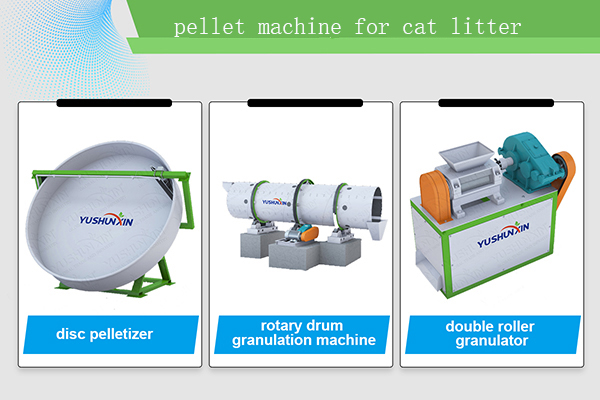
To enhance its commercial appeal, the crushed clay undergoes a granulation process. This involves forming granules through compacting under pressure or using specialized granulation machines. The granules are calibrated to a specific size distribution which ensures optimal clumping while remaining convenient for consumers to handle and pour. In this step, YUSHUNXIN can provide you different granulation machines, for example, roller granulators, disc pelletizer. ect.
5. Drying
The granulated clay is subjected to an industrial drying process. Maintaining low moisture levels is critical because it maximizes the product's absorbency. Rotary dryers or fluid bed dryers are typically employed to achieve the desired conditions efficiently, ensuring the clumping performance is not compromised.
6. Addition of Fragrances and Additives
Although bentonite's natural odor control is significant, consumers often favor scented varieties. Therefore, commercial producers may add fragrances or other proprietary additives to enhance odor control further and appeal to consumer preferences. These ingredients are mixed homogeneously into the clay post-drying.
7. Packaging
The final product is carefully packaged in a variety of bag sizes ranging from small consumer-friendly versions to bulk industrial sizes, depending on market needs. Automated packaging lines ensure precision in weight and sealing to maintain product freshness and ease of handling during distribution.
8. Quality Control and Distribution
Quality control checks are run throughout the manufacturing process to ensure the product meets safety and efficacy standards. Following packaging, the product is distributed through logistical networks to retail outlets or wholesalers, ready to meet household needs globally.
Through meticulous attention to detail and an emphasis on quality, the commercial production of cat litter using bentonite clay provides a product that is both effective and economically viable, serving the needs of feline owners worldwide. The continuous innovation in formulation and processing ensures that commercial bentonite clay cat litter remains a market leader in pet care products. If you want to know more information about cat litter production process,please visit: https://www.fertilizerequipmentprice.com/cat-litter-production-line/